TV Size Chart: 32-98 Inches With Width & Height
Use this TV size chart to check the screen-only width and height of common 16:9 TVs, then compare how 65, 75, and 85-inch options change wall fit, visible area, and viewing distance.

How to read a TV size chart
A TV size chart turns the diagonal number on the box into the part you actually need in a room: real width and real height. That makes it much easier to tell whether a screen will sit comfortably on the wall, the stand, and the room around it.
TV size chart (16:9 screens)
Most modern TVs use a 16:9 aspect ratio, so the width and height below are calculated from that standard. Sizes are approximate and measured in inches.
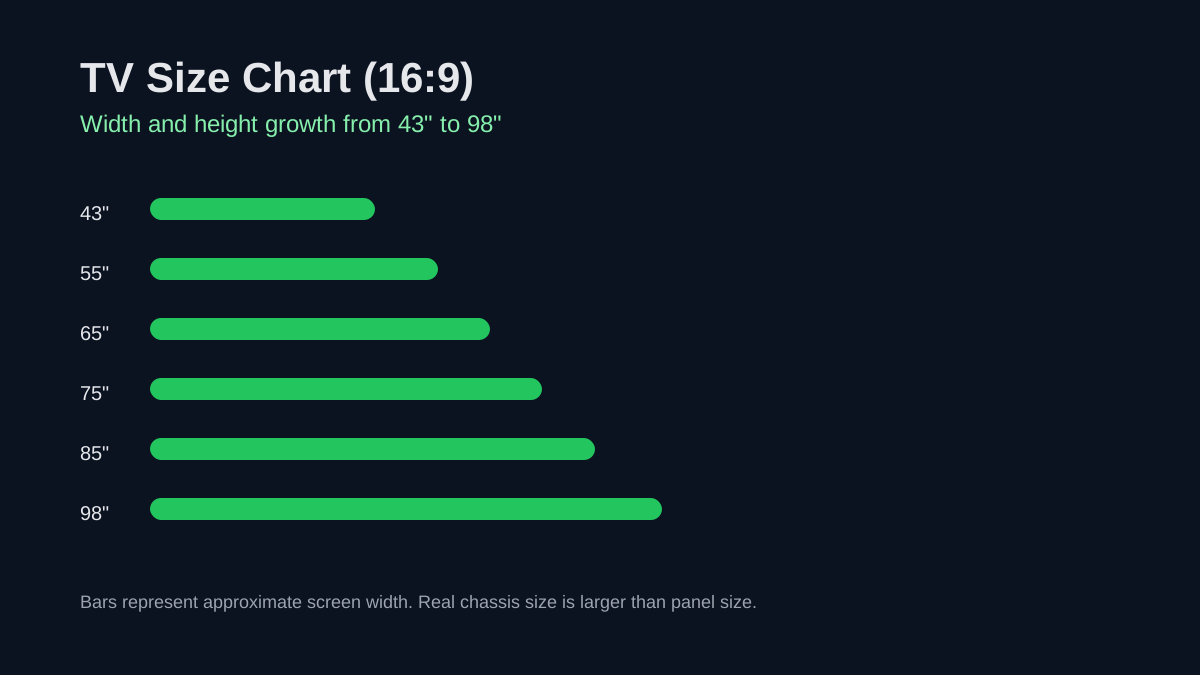
Common TV sizes and real dimensions
| TV size (diagonal) | Width (approx.) | Height (approx.) |
|---|---|---|
| 32 inch | 27.9 | 15.7 |
| 40 inch | 34.9 | 19.6 |
| 43 inch | 37.5 | 21.1 |
| 50 inch | 43.6 | 24.5 |
| 55 inch | 47.9 | 27.0 |
| 65 inch | 56.7 | 31.9 |
| 75 inch | 65.4 | 36.8 |
| 85 inch | 74.1 | 41.7 |
| 98 inch | 85.4 | 48.0 |
These are screen-only dimensions for a 16:9 panel. Real TVs are slightly larger because of the bezel and chassis.
65-inch TV dimensions and room fit
A 65-inch 16:9 screen is about 56.7 inches wide and 31.9 inches tall (screen only). Choose it when you want a noticeably large picture but have less wall space, cabinet width, or delivery access than a 75 or 85-inch TV would require.
75 inch TV size comparison: 65, 75, or 85?
A 75-inch 16:9 screen is about 65.4 inches wide and 36.8 inches tall before the bezel. It has about 33% more visible area than a 65-inch screen, while an 85-inch screen adds about 28% more area over 75 inches. That makes 75 inches a genuine middle step, not simply a slightly larger 65-inch TV.
Choose 65 inches when wall width, cabinet size, or delivery access is tight. Choose 75 inches when you want a clearly larger main-room picture without moving into the most demanding installation class. Choose 85 inches when the room, seating distance, and delivery path are all generous and cinematic scale is the priority.
- 65 vs 75: 75 inches adds about 8.7 inches of screen width and 33% more area.
- 75 vs 85: 85 inches adds about 8.7 inches of screen width and 28% more area.
85-inch TV dimensions and larger options
An 85-inch 16:9 screen is about 74.1 inches wide and 41.7 inches tall (screen only). Choose this class when the wall, seating distance, and delivery path can support a more cinematic image; otherwise, 75 inches is easier to place and move.
If you are stepping above 85 inches, measure doorways and wall space first. Large TVs are hard to move once they arrive.
Small TV sizes still matter
Small TV sizes (24-43 inches) are still useful for bedrooms, kitchens, and compact apartments. They are easier to place on narrow stands and can be viewed comfortably at shorter distances.
Largest TV size: what to expect
The largest TV size available to consumers changes over time, but the biggest models typically sit in the 98-115 inch class. These screens are premium and require careful planning for wall strength, mounting, and viewing distance.
Choose size by viewing distance
A simple way to choose is to start with your seating distance. If you want a more cinematic field of view, go larger. If you mostly watch news or TV shows, a smaller size may already feel comfortable. Use a comparison tool to visualize 55, 65, and 75-inch screens at the same distance.
Mounting and furniture considerations
Before buying, measure the width of your TV stand or the wall area where you plan to mount the screen. The TV will be wider than the screen-only width shown in the chart because of bezels and housing, and you also need room for cable clearance.
If you use a stand, check the foot spacing and depth. Some large TVs have wide-set feet that require a longer cabinet, while others use a center stand that needs more depth but less width.
Quick decision checklist
Use this short checklist when you narrow down between two TV sizes.
- Start from actual seating distance, not diagonal preference.
- Validate TV width against wall and furniture limits.
- Confirm mounting height at your eye level.
Common mistakes to avoid
Avoid choosing by diagonal alone. Room depth, screen height, and stand width are often what decide whether a TV actually feels right after installation.
FAQ
How big is a 75 inch TV compared with 65 and 85 inches?
A 75-inch 16:9 screen is about 65.4 inches wide and 36.8 inches tall. It has about 33% more area than 65 inches; an 85-inch screen has about 28% more area than 75 inches.
How wide and tall is a 65-inch TV?
For the screen itself, think roughly 56.7 inches wide by 31.9 inches tall. The full TV will be a bit larger once you include the bezel and cabinet, so do not plan furniture around the screen-only number.
How wide and tall is an 85-inch TV?
An 85-inch 16:9 screen is about 74.1 inches wide and 41.7 inches tall (screen only).
What are common small TV sizes?
Popular small TV sizes include 24, 32, 40, and 43 inches. These sizes work well for bedrooms and compact spaces.